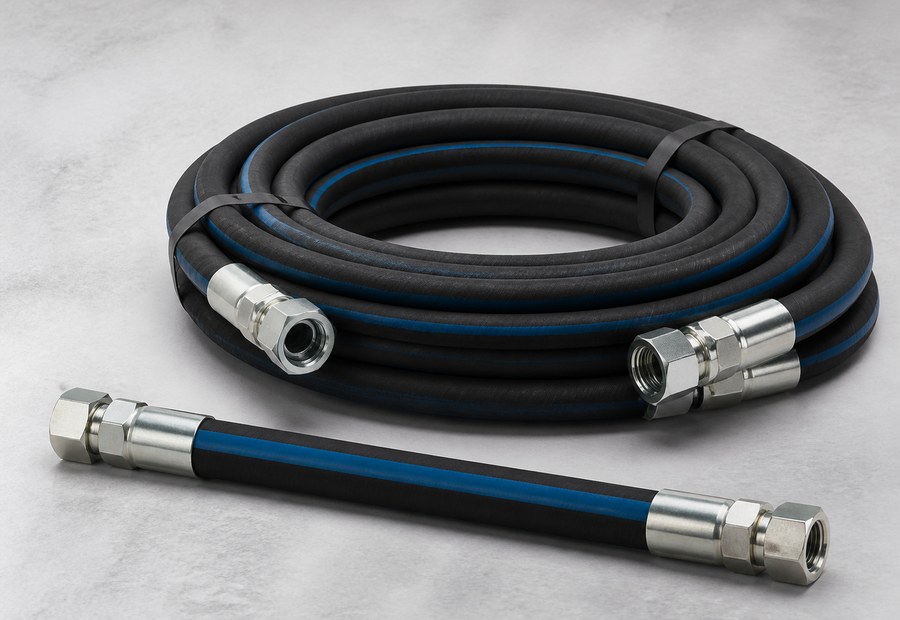
Contractors sometimes ask whether concrete pump hose and hydraulic hose can be selected in the same way. The short answer is no. Hydraulic hose is designed for pressurized hydraulic oil transmission, while concrete pump hose is designed for abrasive concrete delivery. They have different tube materials, reinforcement goals, wear behavior and connection requirements.
Technical Comparison
| Item | Concrete pump hose | Hydraulic hose | Why it matters |
|---|---|---|---|
| Main media | Wet concrete, mortar or grout | Hydraulic oil | Tube material must match the media. |
| Main risk | Abrasive wear, blockage, handling damage | Pressure impulse, leakage, burst, crimp failure | Failure prevention method is different. |
| Pressure focus | Pumping pressure and safe handling | Working pressure, burst pressure and impulse cycle | Do not judge by outside diameter only. |
| Reinforcement goal | Concrete delivery strength and flexibility | Oil pressure resistance and impulse fatigue resistance | Different construction and standards apply. |
| Connection | Concrete pump coupling system | BSP, DIN Metric, JIC, ORFS, flange, ferrule crimping | Wrong connection selection creates safety and leakage risk. |
Where Each Hose Is Used on Construction Sites
| Site equipment | Concrete pump hose role | Hydraulic hose role | Selection note |
|---|---|---|---|
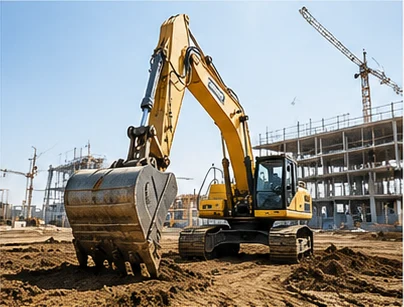
| Concrete pump truck | Concrete placement and discharge line | Boom movement, outriggers, hydraulic control lines | Both hose types may be on one machine but serve different systems. |
| Trailer pump | Delivery hose from pump to placement area | Hydraulic power and control circuits | Do not replace concrete hose with hydraulic hose. |
| Excavator / loader | Usually not used unless concrete attachment requires it | Main boom, arm, bucket, steering and auxiliary lines | Use R2, 4SP or 4SH based on circuit pressure. |
Common Contractor Mistakes
- Choosing hose by outside diameter instead of media and pressure.
- Using hydraulic hose thinking it can handle abrasive concrete.
- Using concrete hose thinking it can replace oil-pressure hydraulic lines.
- Ignoring fitting standard and coupling compatibility.
- Not checking bend radius and handling condition on site.
Contractor Buying Checklist
For concrete delivery, confirm concrete type, pumping pressure, hose inside diameter, coupling style, length and handling condition. For hydraulic systems, confirm hydraulic oil pressure, old hose marking, fitting standard, ferrule, angle, hose length and equipment position.
Related Product Pages
For machine hydraulic lines, review braided hydraulic hose, spiral hydraulic hose and hose fittings and ferrules. For concrete pumping needs, send the working condition and coupling photos for selection support.
Contact Sigit by WhatsApp for contractor hose selection: 0811-3777-570.