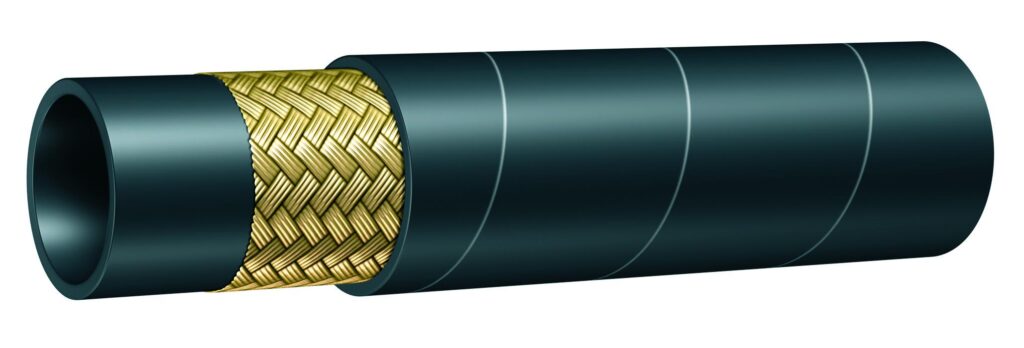
Hydraulic hoses are critical components in mobile machinery, industrial equipment, and hydraulic power systems. Choosing the wrong hose can cause premature failure, oil leakage, unplanned downtime, and safety risks.
One common question from buyers is simple:
Should I choose a single wire hydraulic hose or a double wire hydraulic hose?
Although these two hose types may look similar from the outside, they are different in reinforcement construction, pressure capability, flexibility, service life, and application suitability. This guide explains the key differences and helps equipment owners, distributors, and maintenance engineers choose the right hose.
What Is a Single Wire Hydraulic Hose?
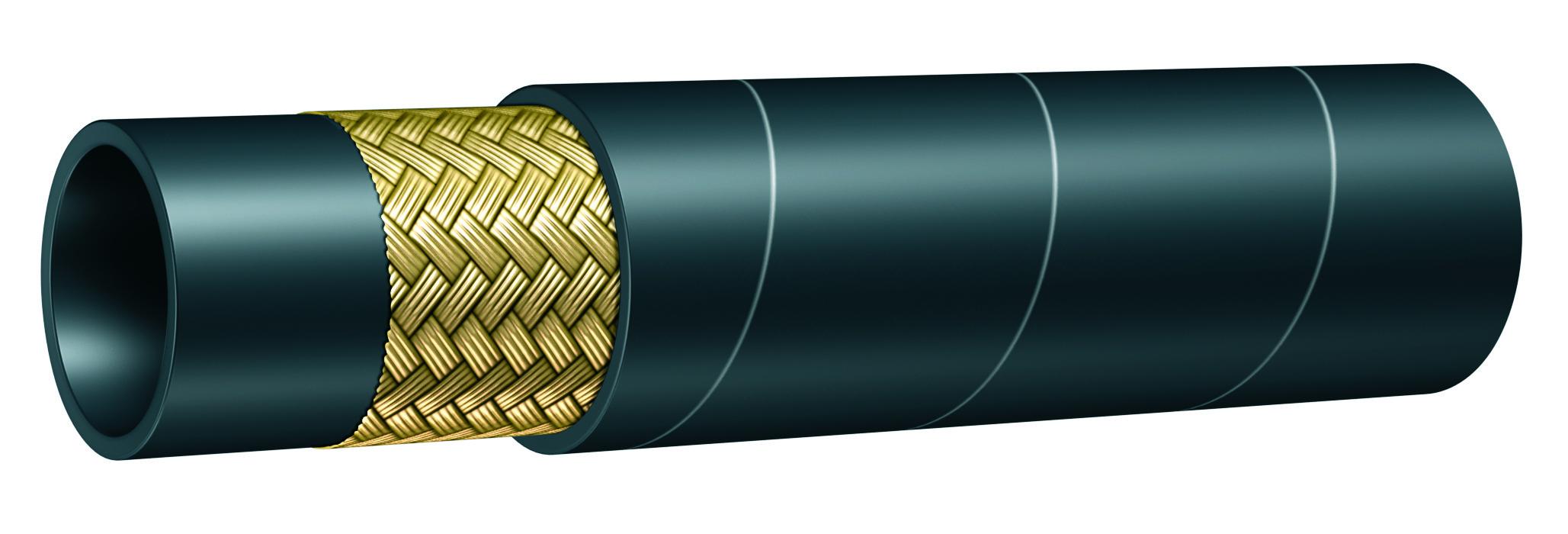
A single wire hydraulic hose uses one layer of high-tensile steel wire braid reinforcement. It is commonly selected for medium-pressure hydraulic systems where flexibility and cost efficiency are important.
Typical standards include:
- SAE 100R1AT
- EN853 1SN
- EN857 1SC
Single wire hoses are generally easier to route and more flexible than double wire hoses. They are widely used in medium-duty hydraulic lines where pressure shock and continuous heavy loading are not extreme.
Typical applications include:
- Agricultural machinery
- Small excavators
- Forklifts
- Hydraulic power units
- Industrial hydraulic systems
- General maintenance and replacement lines
What Is a Double Wire Hydraulic Hose?
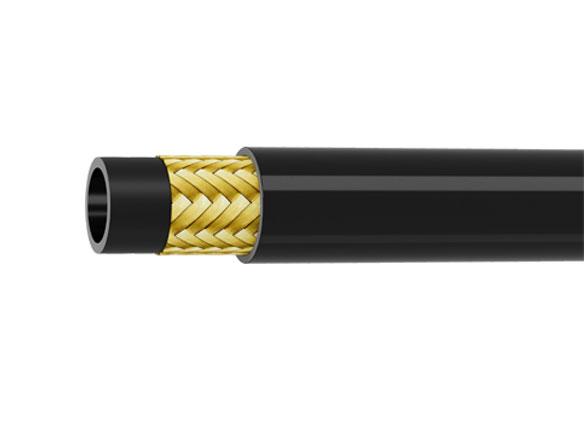
A double wire hydraulic hose contains two layers of high-tensile steel wire braid reinforcement. The additional steel wire layer improves pressure resistance, impulse performance, and durability in more demanding hydraulic circuits.
Typical standards include:
- SAE 100R2AT
- EN853 2SN
- EN857 2SC
Double wire hoses are commonly used when the hydraulic system operates at higher pressure or faces harsher working conditions, such as vibration, abrasion, long operating hours, or frequent pressure pulses.
Typical applications include:
- Excavators
- Wheel loaders
- Mining equipment
- Palm oil machinery
- Cranes
- Heavy-duty construction machinery
- Industrial equipment with higher pressure requirements
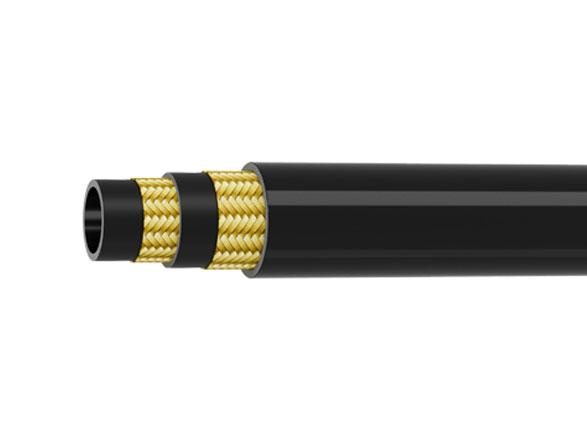
Construction Comparison
| Component | Single Wire Hose | Double Wire Hose |
|---|---|---|
| Inner Tube | Synthetic rubber | Synthetic rubber |
| Reinforcement | 1 steel wire braid layer | 2 steel wire braid layers |
| Outer Cover | Abrasion-resistant rubber | Abrasion-resistant rubber |
| Pressure Capability | Medium | High |
| Flexibility | Higher | Moderate |
| Weight | Lighter | Heavier |
| Typical Standards | SAE 100R1AT, EN853 1SN, EN857 1SC | SAE 100R2AT, EN853 2SN, EN857 2SC |
The main difference is the reinforcement layer. A single wire hose is lighter and more flexible, while a double wire hose offers higher pressure capability and better resistance to demanding service conditions.
Pressure Comparison
The exact working pressure depends on hose size, standard, compound, manufacturer, and coupling system. As a practical reference:
| Hose Type | Typical Working Pressure |
|---|---|
| SAE 100R1AT / EN853 1SN | 40-225 bar |
| SAE 100R2AT / EN853 2SN | 80-400 bar |
For high-pressure hydraulic systems, double wire hoses are generally recommended. However, the final selection should always be based on the equipment working pressure, pressure spikes, temperature, fluid type, bend radius, and hose assembly requirements.
Why Are Some Hydraulic Hoses More Expensive?
Many buyers compare hydraulic hoses only by price. In real service, hose cost is affected by material quality, reinforcement strength, rubber compound, braid density, production control, and testing standards.
A cheaper hose may reduce purchase cost, but it can also increase the risk of leakage, shutdown, and replacement labor. For heavy equipment and continuous-operation industries, hose quality directly affects total maintenance cost.
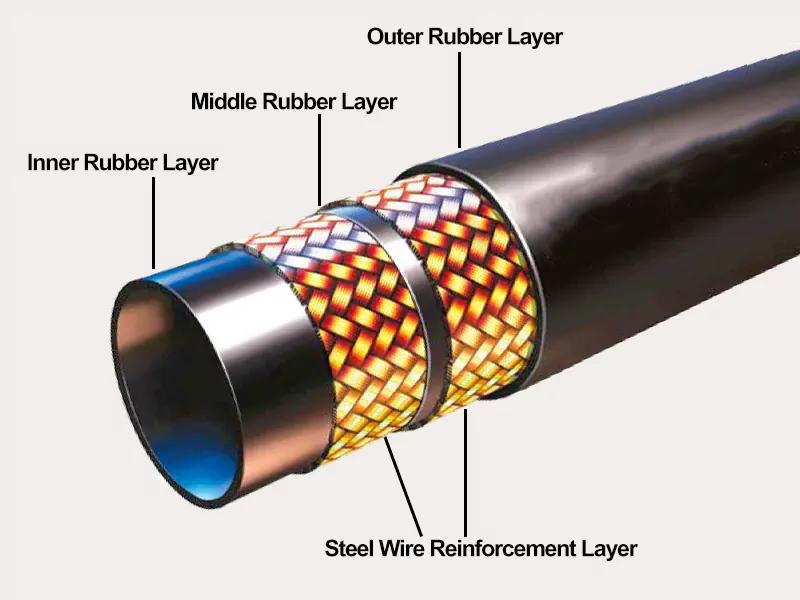
Key Quality Factors to Compare
1. Inner Rubber Content
The inner tube is in direct contact with hydraulic oil. Higher rubber quality helps improve oil resistance, flexibility, cracking resistance, and service life.
| Parameter | Indo Hydraulics | Typical Market Level |
|---|---|---|
| Inner Rubber Content | 40% | 28%-35% |
2. Steel Wire Diameter
Steel reinforcement is one of the most important factors affecting pressure capability. A stronger wire structure generally improves burst pressure, impulse resistance, and fatigue life.
| Parameter | Indo Hydraulics | Typical Market Level |
|---|---|---|
| Steel Wire Diameter | 0.30 mm | 0.25-0.28 mm |
3. Steel Wire Braid Density
Braid density affects hose strength, stability, and service life. Low braid density may reduce pressure resistance and make the hose more vulnerable under repeated pressure cycles.
| Parameter | Indo Hydraulics | Typical Market Level |
|---|---|---|
| Steel Wire Coverage | 98% | 85%-92% |
4. Outer Rubber Content
The outer cover protects the hose from abrasion, weather, sunlight, ozone, and oil contamination. Better cover quality is important for outdoor, mining, construction, and palm oil applications.
| Parameter | Indo Hydraulics | Typical Market Level |
|---|---|---|
| Outer Rubber Content | 38% | 25%-32% |
When Should You Choose Single Wire Hydraulic Hose?
Choose single wire hydraulic hose when:
- System pressure is relatively low or medium
- Equipment operates intermittently
- Maximum flexibility is required
- Installation space is limited
- Cost efficiency is important
- The hose is used in general hydraulic circuits without severe pressure spikes
Recommended applications include forklifts, agricultural tractors, hydraulic stations, small machines, and standard industrial equipment.
When Should You Choose Double Wire Hydraulic Hose?
Choose double wire hydraulic hose when:
- System pressure is high
- Equipment operates continuously
- Pressure shock or vibration is common
- The working environment is severe
- Longer service life is required
- Downtime cost is high
Recommended applications include excavators, mining equipment, palm oil machinery, wheel loaders, cranes, and heavy construction machinery.
Why Mining and Palm Oil Industries Prefer Double Wire Hose
Mining and palm oil operations in Indonesia often involve heavy-duty working conditions, including:
- Long operating hours
- High ambient temperature
- Heavy vibration
- Abrasive environments
- High-pressure hydraulic systems
- Frequent maintenance pressure on site
For these applications, premium double wire hydraulic hoses can help provide:
- Longer service life
- Reduced downtime
- Improved operational safety
- Lower total maintenance cost
- Better performance in harsh field conditions
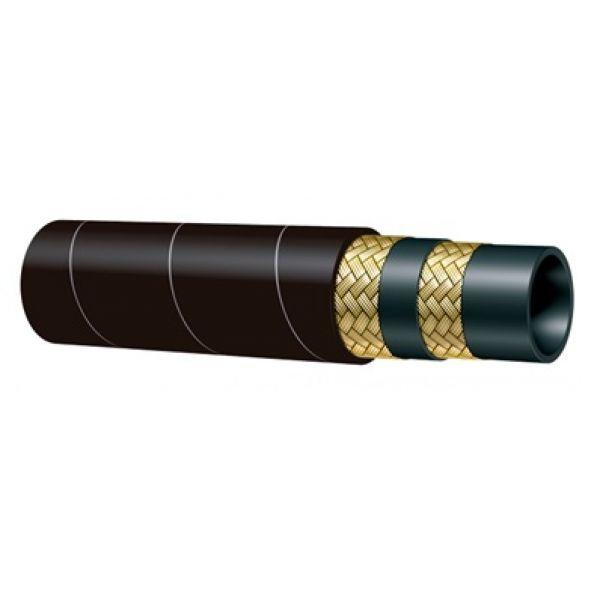
Quick Selection Guide
| Application Condition | Recommended Hose |
|---|---|
| Medium pressure, flexible routing, standard duty | Single wire hydraulic hose |
| High pressure, heavy vibration, continuous operation | Double wire hydraulic hose |
| Forklift, agricultural tractor, hydraulic station | Single wire hose is usually sufficient |
| Excavator, wheel loader, mining equipment | Double wire hose is usually preferred |
| Cost-sensitive general replacement | Single wire hose may be suitable |
| Harsh outdoor or heavy-duty operation | Double wire hose is safer and more durable |
Common Selection Mistakes
- Choosing hydraulic hose only by price
- Replacing a double wire hose with single wire without checking working pressure
- Ignoring pressure spikes and impulse cycles
- Using the wrong hose size for flow rate
- Installing the hose below its minimum bend radius
- Mixing hose and fitting systems without checking crimp compatibility
- Ignoring abrasion protection in mining or construction sites
- Using low-quality hose in continuous-operation equipment
Conclusion
Selecting the correct hydraulic hose is not only about price. A premium hydraulic hose with stronger steel reinforcement, higher rubber quality, greater braid density, and better abrasion resistance can significantly reduce equipment downtime and maintenance cost.
For standard medium-pressure systems, a single wire hydraulic hose is often practical and cost-effective. For demanding applications such as mining, palm oil, construction, and heavy equipment, a high-quality double wire hydraulic hose is usually the preferred choice.
Need Help Selecting the Right Hydraulic Hose?
Indo Hydraulics can help you select the right hydraulic hose according to:
- Working pressure
- Temperature
- Hydraulic fluid type
- Application
- Hose size
- Fitting standard
- Quantity and delivery requirements
Email: sales@indohydraulics.com
Website: www.indohydraulics.com
Supporting OEMs, distributors, mining companies, palm oil machinery users, and industrial projects throughout Indonesia.
FAQ
What is the main difference between single wire and double wire hydraulic hose?
The main difference is reinforcement. Single wire hose uses one steel wire braid layer, while double wire hose uses two steel wire braid layers for higher pressure resistance and better durability.
Is double wire hydraulic hose always better?
Not always. Double wire hose is better for high-pressure and heavy-duty applications, but single wire hose is more flexible, lighter, and more cost-effective for medium-pressure systems.
Can I replace a double wire hose with a single wire hose?
Only if the single wire hose meets the system working pressure, impulse requirement, bend radius, temperature range, fluid compatibility, and fitting requirements. In high-pressure circuits, replacing double wire hose with single wire hose may cause early failure.
Which hose is better for mining equipment?
Double wire hydraulic hose is usually preferred for mining equipment because it offers higher pressure capability and better durability under vibration, abrasion, and continuous operation.
Which hose is suitable for palm oil machinery?
Palm oil machinery often works in hot, humid, and heavy-duty conditions. Double wire hydraulic hose is usually recommended for high-pressure circuits and continuous-operation equipment.

